Pernod Ricard - The Island
UX/UI Design
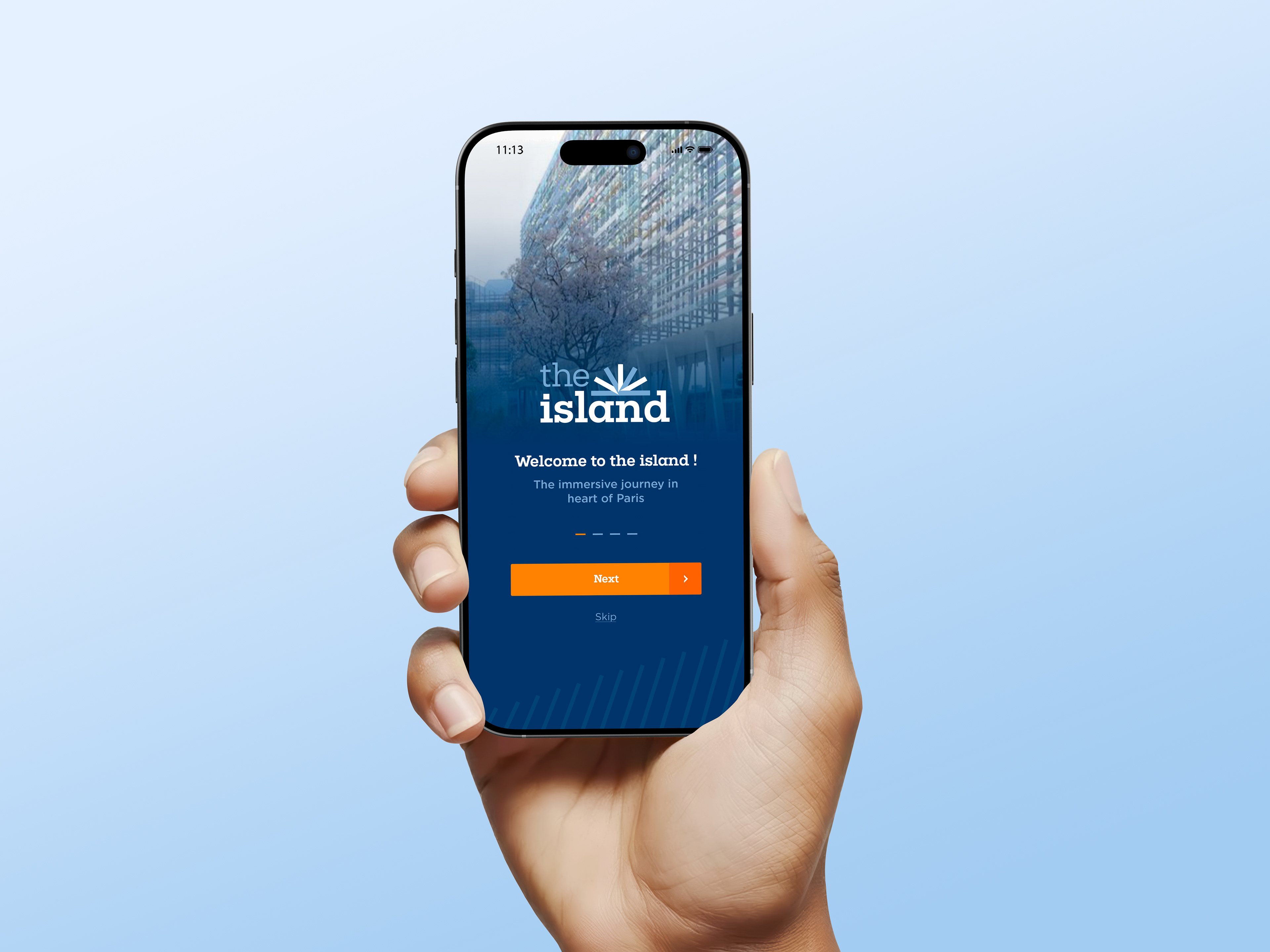
How might we design a digital companion that elevates the visitor experience while reinforcing brand perception and improving operational efficiency ?
ROLE Product Designer
FOCUS User research, Prototyping, Delivery
PLATFORM Mobile App
OVERVIEW
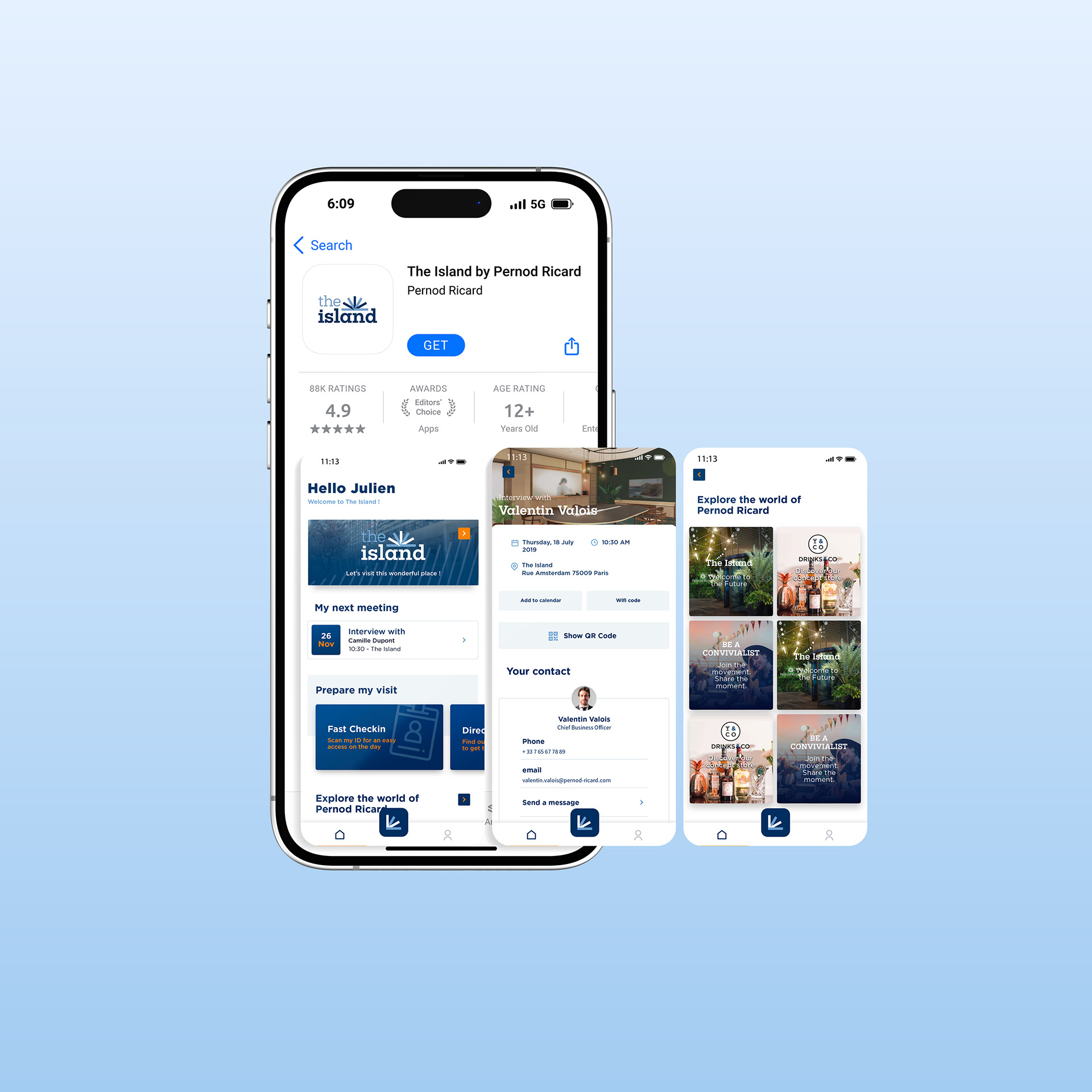
During my collaboration with Backstory, I worked with Schneider Electric and Pernod Ricard on the design of their internal application, “The Island.” The project was launched to coincide with the opening of Pernod Ricard’s new Paris offices. The challenge was to create a seamless, autonomous journey for visitors while reinforcing brand perception and reducing operational friction for internal teams.
USERS
The product serves two main user profiles with distinct needs: visitors, who want to prepare and navigate their visit seamlessly, and employees, who need to manage their day-to-day presence in the offices, including room bookings and access to company and office information.
APPROACH
We focused on a few strong design principles :
> Autonomy — empower visitors to manage their visit independently
> Clarity — reduce cognitive load in a complex environment
> Brand consistency — Designed a UI aligned with Pernod Ricard’s brand identity
> Usefulness — every feature must serve a clear, practical need
As a Product Designer, I led the design production and co-facilitated exploration workshops with the Lead UX Researcher.
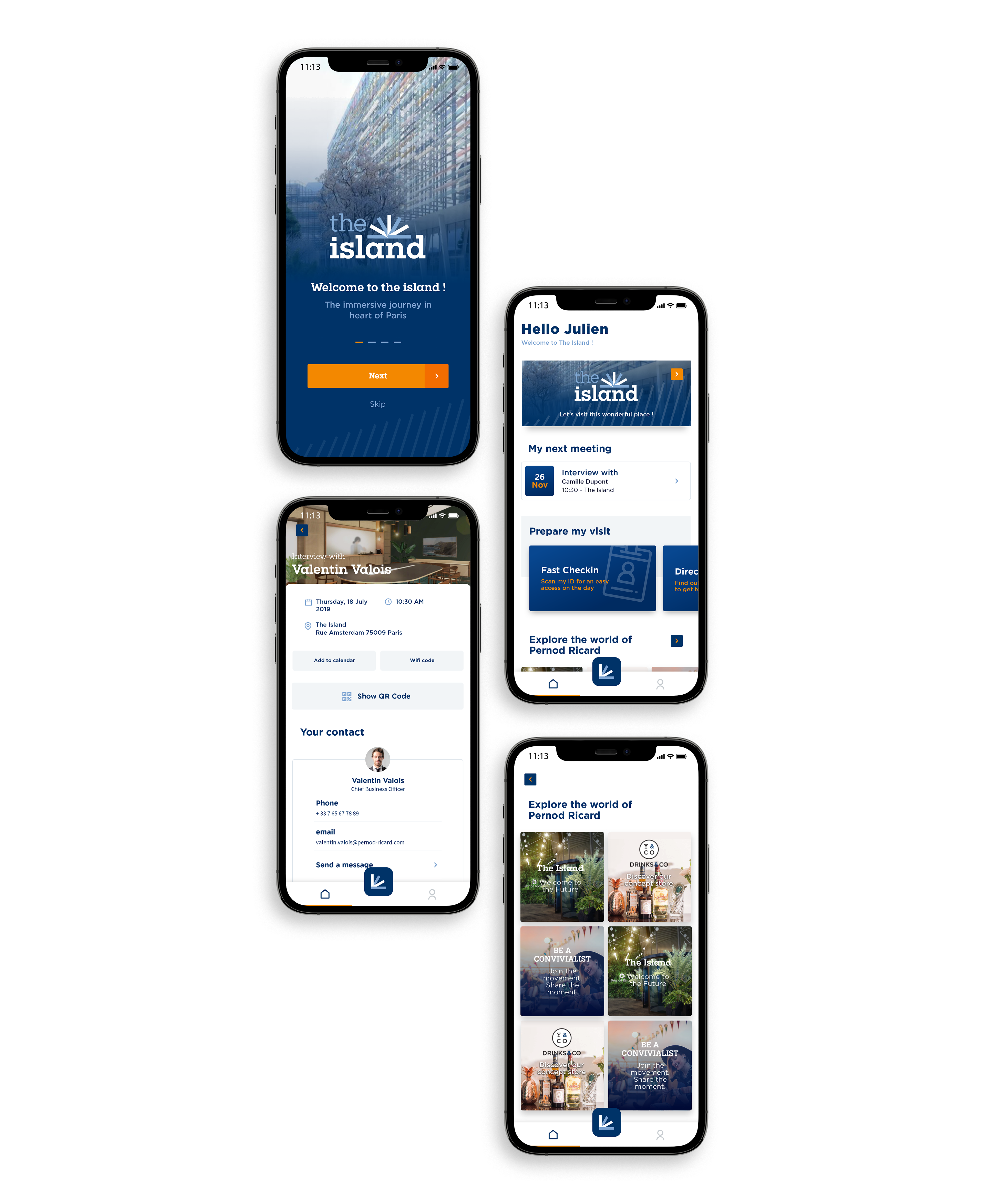
SOLUTION
We designed a digital companion offering two tailored experiences: visitors could plan their visit, navigate the building, and access curated recommendations, while employees could manage daily office presence, book rooms, and access company information. The application is built on the EcoStruxure™ Engage framework developed by Schneider Electric.
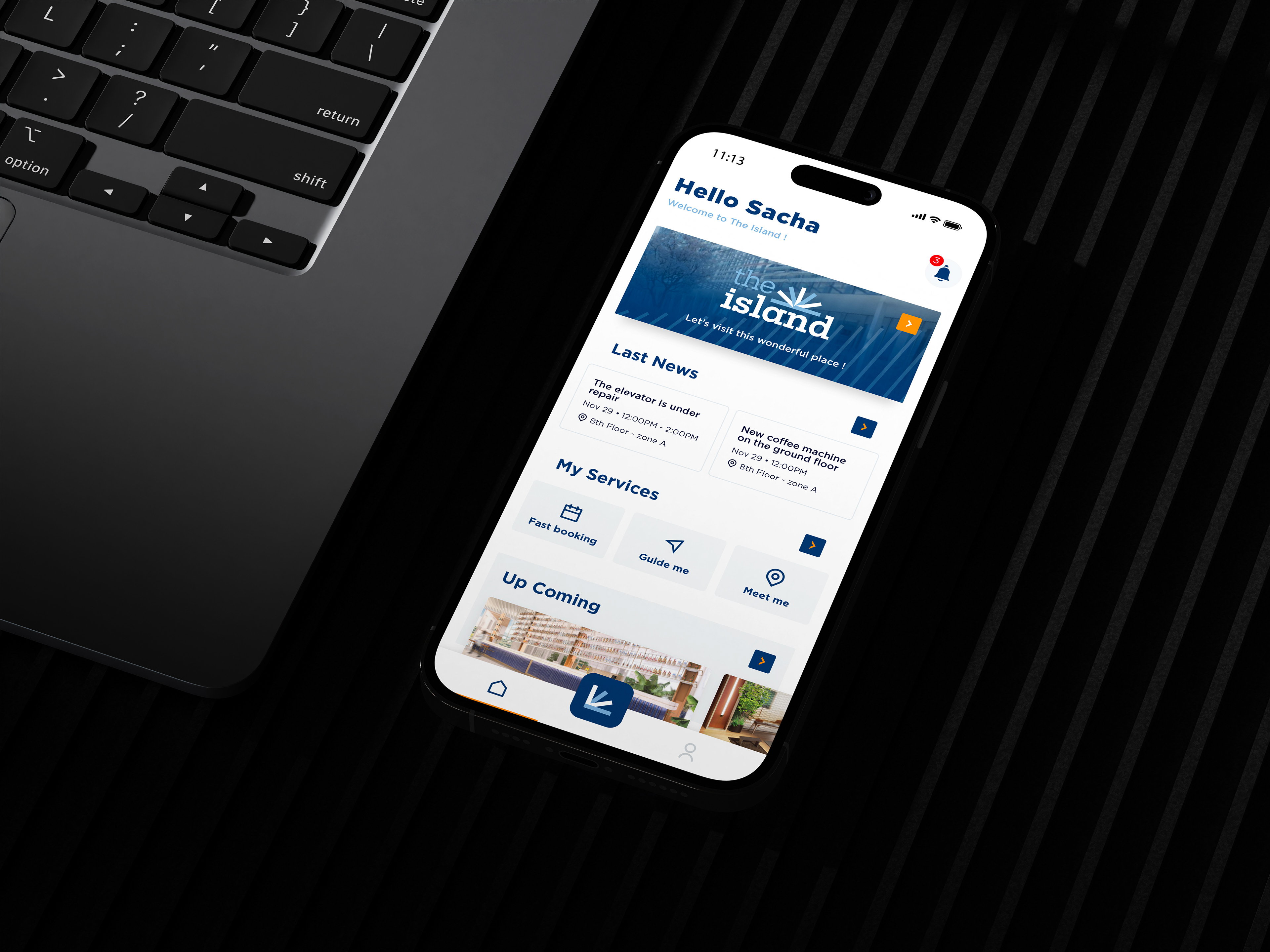
Here is a video presenting the 'The Island' app in context of use.
IMPACT
The solution created a smoother, more reassuring experience for visitors while simplifying office operations for employees. Key outcomes include :
> Increased visitor autonomy
> Stronger alignment between brand image and physical experience
> Reduced friction for internal operational teams
> Scalable foundation for future internal use cases